By Proper Estates
Alpine, New Jersey is a borough that has always understood the value of preservation. In a state where rapid development has transformed many once-distinctive communities into interchangeable suburban landscapes, Alpine has maintained a fierce and admirable commitment to protecting the architectural character, natural environment, and historical integrity that make it one of the most singular residential addresses in the entire country.
For buyers who are drawn to homes with genuine history, distinctive craftsmanship, and a sense of permanence that newer construction simply cannot replicate, Alpine's historic properties represent an extraordinary opportunity.
At Proper Estates, we work with discerning buyers who recognize that purchasing a home in a historic district is a fundamentally different experience than buying a conventional property. The rewards are exceptional. The considerations are real. And the guidance you receive matters enormously in determining whether the process unfolds smoothly or becomes unnecessarily complicated.
Here is what every serious buyer should understand before pursuing a charming historic home in Alpine, NJ.
Key Takeaways
-
Historic homes in Alpine offer architectural distinction, craftsmanship, and community character that new construction cannot replicate
-
Buyers must understand the specific restrictions that govern renovations, additions, and exterior modifications in historic districts
-
Pre-purchase inspections for historic properties require greater depth and specialization than standard home inspections
-
Financing a historic home may involve additional steps, but specialized loan programs and tax incentive opportunities exist for qualifying properties
-
The long term value of well-maintained historic homes in prestigious communities like Alpine is historically strong
-
Working with a real estate team that understands the specific dynamics of historic property transactions in Bergen County is essential
-
At Proper Estates, we bring the local expertise and transactional sophistication that historic home purchases in Alpine demand
Understand What Historic District Designation Actually Means
The first thing any buyer should do when considering a home in a historic district is develop a clear and accurate understanding of what that designation means in practical terms. Historic district status is not simply a label that celebrates a neighborhood's age or architectural charm. It is a regulatory framework that governs how properties within the district can be modified, maintained, and developed.
In New Jersey, historic districts can be designated at the federal, state, or local municipal level, and the restrictions associated with each designation vary. Properties listed on the National Register of Historic Places carry certain protections and eligibility for federal tax incentives, but the most directly applicable regulations for day to day ownership are typically those established at the local level through municipal historic preservation commissions.
In Alpine and the broader Bergen County area, buyers should research whether a property of interest falls under any local historic overlay zoning, whether it carries individual landmark status, and what specific review processes apply to proposed changes. At Proper Estates, we guide our buyers through this research process thoroughly before an offer is submitted, because understanding the regulatory landscape from the outset prevents costly surprises after closing.
In New Jersey, historic districts can be designated at the federal, state, or local municipal level, and the restrictions associated with each designation vary. Properties listed on the National Register of Historic Places carry certain protections and eligibility for federal tax incentives, but the most directly applicable regulations for day to day ownership are typically those established at the local level through municipal historic preservation commissions.
In Alpine and the broader Bergen County area, buyers should research whether a property of interest falls under any local historic overlay zoning, whether it carries individual landmark status, and what specific review processes apply to proposed changes. At Proper Estates, we guide our buyers through this research process thoroughly before an offer is submitted, because understanding the regulatory landscape from the outset prevents costly surprises after closing.
Know What You Can and Cannot Change
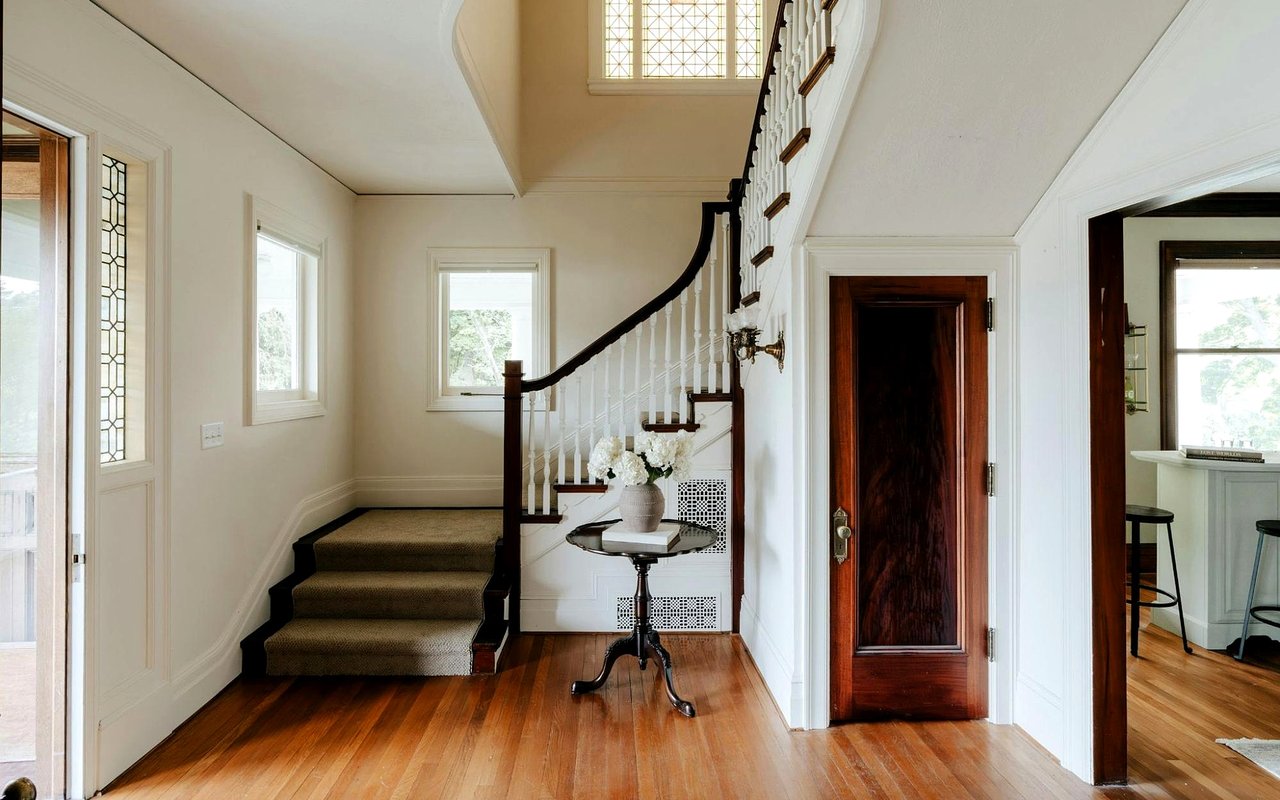
For many buyers, the appeal of a historic home in Alpine lies precisely in its original character, the hand-carved millwork, the original hardwood floors, the period-appropriate window proportions, the masonry detailing that reflects a level of craftsmanship that is essentially unavailable in contemporary construction. Preserving those elements is both a privilege and, in many cases, a requirement.
Historic preservation regulations typically govern exterior modifications most strictly. Changes to rooflines, window replacements, additions, exterior cladding materials, and demolition of historic fabric are all commonly subject to review and approval by a preservation commission or architectural review board.
The goal of these reviews is to ensure that any changes are compatible with the historic character of the property and the surrounding district.
Interior modifications are generally less regulated, though buyers should not assume that any interior change is automatically permissible without review. Properties that carry individual landmark status or that are subject to specific preservation easements may have interior restrictions as well.
At Proper Estates, we always encourage buyers of historic Alpine properties to sit down with a preservation architect or consultant before finalizing their vision for any renovation or addition. Understanding what is achievable within the regulatory framework before you close is far more productive than discovering limitations after the fact.
Historic preservation regulations typically govern exterior modifications most strictly. Changes to rooflines, window replacements, additions, exterior cladding materials, and demolition of historic fabric are all commonly subject to review and approval by a preservation commission or architectural review board.
The goal of these reviews is to ensure that any changes are compatible with the historic character of the property and the surrounding district.
Interior modifications are generally less regulated, though buyers should not assume that any interior change is automatically permissible without review. Properties that carry individual landmark status or that are subject to specific preservation easements may have interior restrictions as well.
At Proper Estates, we always encourage buyers of historic Alpine properties to sit down with a preservation architect or consultant before finalizing their vision for any renovation or addition. Understanding what is achievable within the regulatory framework before you close is far more productive than discovering limitations after the fact.
Commission a Specialized Historic Property Inspection
A standard home inspection is an important step in any real estate transaction, but for historic properties in Alpine, it is genuinely insufficient on its own. Homes built in earlier eras present a distinct set of structural, mechanical, and material considerations that require a more specialized eye and a deeper level of investigation.
Buyers should seek out inspectors with demonstrated experience in historic properties who understand the specific issues common to older construction. These include the presence of original knob and tube wiring or early generation electrical panels, cast iron or galvanized plumbing that may be approaching the end of its functional life, plaster wall systems that require specialized repair techniques, original single pane windows with period appropriate framing that may need restoration rather than replacement, and the potential presence of lead paint or asbestos in materials that were standard in earlier construction periods.
None of these issues is necessarily disqualifying. Many buyers of historic Alpine properties are prepared to address them as part of a thoughtful and phased stewardship of the home. What matters is that buyers enter the transaction with a complete and accurate picture of the property's condition so that their investment decisions are grounded in reality.
At Proper Estates, we maintain relationships with inspectors and preservation specialists who bring the depth of expertise that historic property evaluations in Bergen County require.
Buyers should seek out inspectors with demonstrated experience in historic properties who understand the specific issues common to older construction. These include the presence of original knob and tube wiring or early generation electrical panels, cast iron or galvanized plumbing that may be approaching the end of its functional life, plaster wall systems that require specialized repair techniques, original single pane windows with period appropriate framing that may need restoration rather than replacement, and the potential presence of lead paint or asbestos in materials that were standard in earlier construction periods.
None of these issues is necessarily disqualifying. Many buyers of historic Alpine properties are prepared to address them as part of a thoughtful and phased stewardship of the home. What matters is that buyers enter the transaction with a complete and accurate picture of the property's condition so that their investment decisions are grounded in reality.
At Proper Estates, we maintain relationships with inspectors and preservation specialists who bring the depth of expertise that historic property evaluations in Bergen County require.
Explore Financing Options and Tax Incentive Programs
Financing a historic home in Alpine follows the same general process as financing any residential property, but there are additional considerations and potential advantages that buyers should be aware of before approaching lenders.
On the consideration side, lenders will conduct their own appraisal of the property, and the specialized nature of historic homes can sometimes create complexity in the comparable sales analysis that supports the appraisal. Buyers should work with lenders who have experience with historic and luxury properties in Bergen County and who understand how to properly evaluate a home whose character and value may not be easily captured through conventional comparable sales methodology.
On the opportunity side, buyers and future owners of qualifying historic properties may have access to meaningful financial incentives. The Federal Historic Tax Credit program provides a twenty percent tax credit for the certified rehabilitation of income-producing historic properties. New Jersey also maintains its own Historic Property Reinvestment Act, which offers additional credits for qualifying rehabilitation projects.
While these programs apply most directly to income-producing properties, buyers who intend to undertake significant rehabilitation work should consult with a tax advisor to understand what opportunities may be available to them.
At Proper Estates, we connect our buyers with financial and legal professionals who specialize in historic property transactions and can provide guidance that is specific to their individual situation.
On the consideration side, lenders will conduct their own appraisal of the property, and the specialized nature of historic homes can sometimes create complexity in the comparable sales analysis that supports the appraisal. Buyers should work with lenders who have experience with historic and luxury properties in Bergen County and who understand how to properly evaluate a home whose character and value may not be easily captured through conventional comparable sales methodology.
On the opportunity side, buyers and future owners of qualifying historic properties may have access to meaningful financial incentives. The Federal Historic Tax Credit program provides a twenty percent tax credit for the certified rehabilitation of income-producing historic properties. New Jersey also maintains its own Historic Property Reinvestment Act, which offers additional credits for qualifying rehabilitation projects.
While these programs apply most directly to income-producing properties, buyers who intend to undertake significant rehabilitation work should consult with a tax advisor to understand what opportunities may be available to them.
At Proper Estates, we connect our buyers with financial and legal professionals who specialize in historic property transactions and can provide guidance that is specific to their individual situation.
Appreciate the Long Term Value of Alpine Historic Properties
Beyond the regulatory and practical considerations, it is worth stepping back and recognizing why historic homes in a community like Alpine command the attention and investment they do. These are not simply old houses. They are properties with stories, with craftsmanship, with architectural integrity that reflects the vision and skill of another era entirely.
In Alpine, where the residential landscape already commands some of the highest property values in all of New Jersey, well-maintained historic homes carry an additional layer of distinction that sets them apart even within this exceptional market. Buyers who invest thoughtfully in the preservation and stewardship of these properties are not simply acquiring a home. They are becoming custodians of a piece of Bergen County's architectural and cultural heritage, and that role carries genuine meaning.
The long term value trajectory of well-preserved historic homes in prestigious communities is consistently strong. Scarcity is a fundamental driver of value in luxury real estate, and truly exceptional historic properties in a market like Alpine are by definition irreplaceable.
At Proper Estates, we believe that buyers who approach these properties with the right preparation and the right team are making one of the most intelligent and rewarding investments available in the current market.
In Alpine, where the residential landscape already commands some of the highest property values in all of New Jersey, well-maintained historic homes carry an additional layer of distinction that sets them apart even within this exceptional market. Buyers who invest thoughtfully in the preservation and stewardship of these properties are not simply acquiring a home. They are becoming custodians of a piece of Bergen County's architectural and cultural heritage, and that role carries genuine meaning.
The long term value trajectory of well-preserved historic homes in prestigious communities is consistently strong. Scarcity is a fundamental driver of value in luxury real estate, and truly exceptional historic properties in a market like Alpine are by definition irreplaceable.
At Proper Estates, we believe that buyers who approach these properties with the right preparation and the right team are making one of the most intelligent and rewarding investments available in the current market.
Frequently Asked Questions About Historic Homes in Alpine
How do I find out if a property is in a designated historic district in Alpine?
The most reliable starting points are the New Jersey State Historic Preservation Office, the Bergen County historic preservation resources, and Alpine's own municipal planning and zoning records. At Proper Estates, we conduct this research on behalf of our buyers as part of our standard due diligence process.
Will historic district restrictions prevent me from adding square footage to the home?
Not necessarily, but additions to historic properties are subject to review and must typically be designed to be compatible with the historic character of the existing structure. Working with an architect who specializes in historic preservation is essential for navigating this process successfully.
Are historic homes in Alpine more expensive to maintain than conventional properties?
Maintenance costs for historic homes can be higher in certain areas, particularly when repairs require period-appropriate materials or specialized craftspeople. However, many historic homes in Alpine were built to extraordinary standards of quality that make them structurally sound investments when properly maintained.
Can I make interior updates to a historic home in Alpine?
In most cases, interior updates are permitted with fewer restrictions than exterior modifications, though this depends on the specific designation and any easements attached to the property. Buyers should always verify the specific conditions that apply to any property they are considering.
Does historic designation affect my ability to sell the property in the future?
Historic designation does not impair marketability in a community like Alpine. In fact, for buyers who value architectural authenticity and distinction, historic status is frequently a positive differentiator that supports strong resale performance over time.
Purchasing a historic home in Alpine is one of the most rewarding and consequential decisions a buyer can make in the Bergen County real estate market, and it deserves guidance that matches the significance of the investment. At Proper Estates, we bring the local knowledge, professional relationships, and transactional expertise that historic property purchases in Alpine require.
When you are ready to explore what this extraordinary market has to offer, visit us at properestatesnj.com and let us guide you through every step of the process with the care and sophistication your investment deserves.